

A Fire, a Vigil, and Believing Objects Have Spirits
A fascinating conversation with the CEO of Robot.com

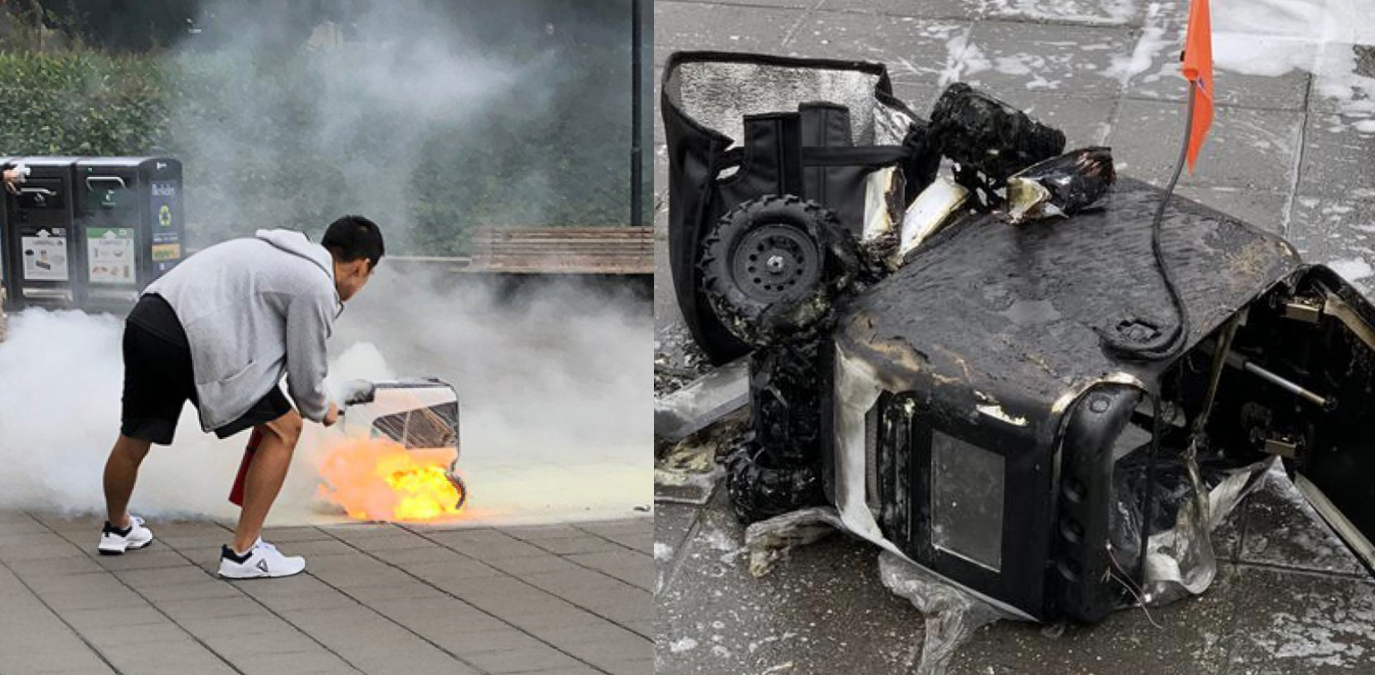
December, 2018. One of Kiwibot’s food delivery robots was cruising the Berkeley campus when it spontaneously burst into flames. Bystanders watched. One grabbed a fire extinguisher. Ultimately, the fire department foamed the smoldering chassis. The internet reveled in what may have been the first-ever case of robot tragedy porn: “Delivery Robot Catches Fire in California” — “Delivery Robot Spontaneously Bursts Into Flames” — “Coming in hot: Food delivery robot bursts into flames.”
After investigating, the company discovered that an employee had accidentally swapped in a defective battery, which hit thermal runaway — a damaged cell generating heat faster than it can dissipate it.
CEO Felipe Chávez Cortés made the necessary call to pull every robot off the sidewalk for inspection, worried about more fires, more damage, more headlines. “I thought that was going to be the end of my robotics career,” he said. Possibly the end of a very promising company, just as things felt like they were getting off the ground.
Then something happened that, at the time, nobody saw coming.
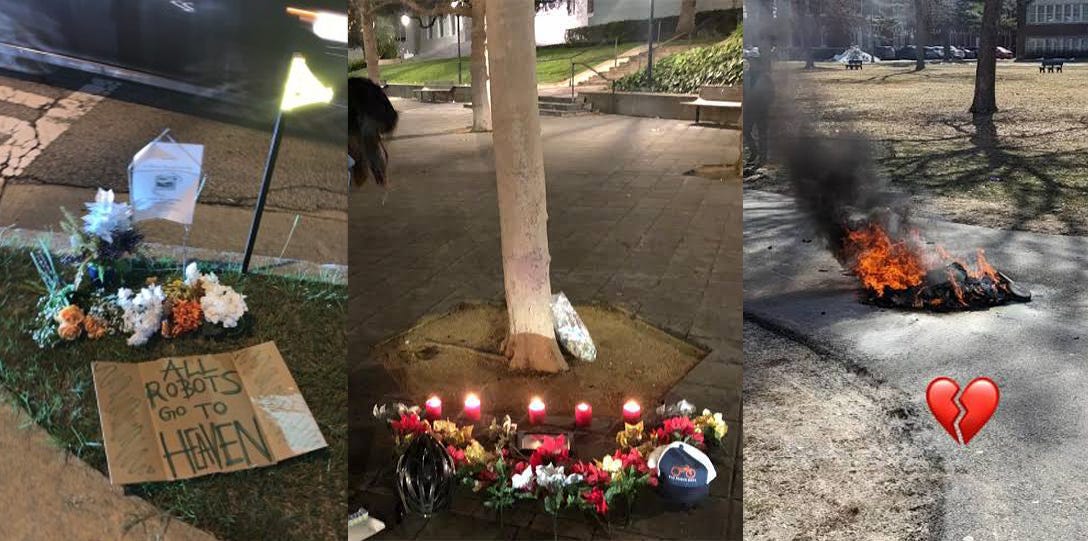
A Berkeley alum tweeted about a candlelit vigil and hundreds of students showed up to pay respects to the thing that kept them fed during exams, between classes, and after late nights partying. Candles and flowers were laid on the spot where the robot had burned. Because, college kids. The Daily Californian quoted them calling it a “hero,” a “legend.” The company got a wave of free press out of it. Although, predictably, not as much as the fire generated. And Felipe got something more valuable than press: a lesson in how people actually related to what he’d built.
Real grief for an inanimate object.
Felipe tells me this story over Zoom, dialing in from a conference in Miami — young, energetic, grinning the entire time we speak. He says the vigil wasn't a footnote in his career. It was a landmark on the road to becoming CEO of Robot.com, the name Kiwibot rebranded to, fresh off launching its first humanoid product at Automate 2026 in Chicago. And more products are already lined up behind it: a warehouse logistics robot, new variations on the food delivery robot, and an advertising and inspection robot with a tail that wags when you pet it.
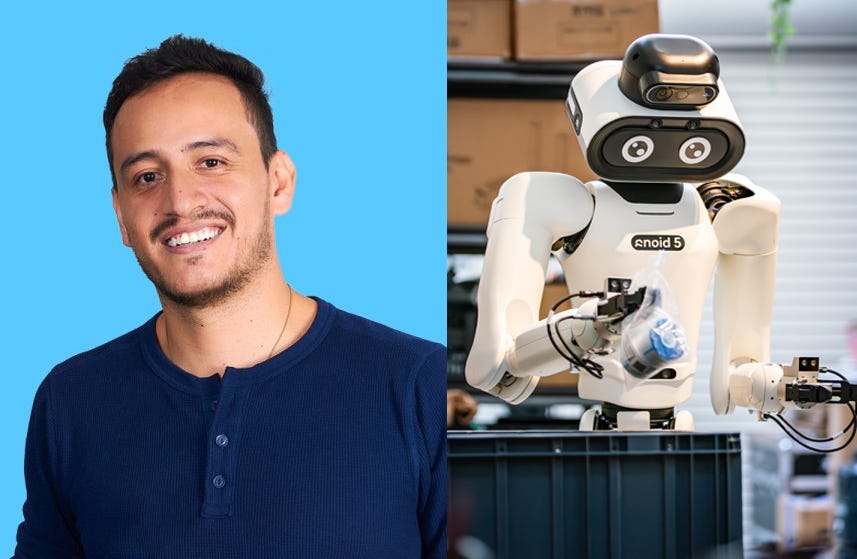
Looking back at Felipe’s story, it’s evident that the Kiwibot catching on fire may have been bad luck, but the vigil that followed wasn’t. That was the consequence of smart character decisions Felipe had been making for years. Many which came to him out of his belief in Shinto — a Japanese spiritual tradition built on the idea that spirit doesn't stop at the edge of a living thing. Inanimate objects can have spirits too. So, it felt right to Felipe that so should robots. “We’re creating these things. They move, they understand, they can communicate with you. They should have a soul.” Hence the name of Robot.com’s software and personality stack — “R-Soul” (more on this later).
Like most things that feel simple in hindsight, these lessons did not come easy. Most came from friction. Before the fire, before the vigil, Felipe and co-founders David Rodriguez and Sergio Pachon Reyes launched the company as a response to Berkeley delivery-fee sticker shock. But not everyone on campus was happy to have them.
They were forced to sit across from anti-tech activists that had, just weeks before, gotten scooters banned. So, the company was in an existential fight for its life while still learning how to walk. “They told me, hey, sidewalks are sacred,” Felipe recalls. “Your robot should not be too big. It should be respectful of the sidewalk, because the sidewalk belongs to people in the first place.” Taking their concerns to heart is why he built the smallest-footprint delivery robot on the market.
Not an engineering constraint. A community one.
A similar, but different kind of pushback is why his food delivery robots were the first in its category to have eyes (years before all of his competitors followed suit). That decision traces back to a rowdier occasion, Berkeley’s Cal Day, when Felipe watched drunk fraternity bros treat the early prototype with no respect at all. You can use your imagination to fill in the blanks. “People will disrespect a robot, but they will not kick a duck or dog in the street, because they’ll feel ashamed that other people will see them doing so.” Felipe’s solution: borrow the relationship that people have with animals by giving their product eyes, names, and a wagging tail.
These same design instincts now carry into their humanoid. I’ve noted in the past that most “serious” robotics companies are currently afraid to advertise the voice and character of their robots, playing it safe by leaning on the wow factor of their technology rather than a defined personality. But not Robot.com. Their product pages showcase voices, really fun hat options, and other wardrobe optionality.
“By next summer, I want thirty percent of our robots to be able to have a conversation with any human that is around them” says Felipe. Including, if you try to chat with one mid-task, it telling you that it’s busy, in character, rather than going silent. That’s not a UX flourish. It’s a technical limitation smoothed out through character. Accomplishing it required Felipe’s team to invest in better microphones, speakers, and lighting — because a robot meant to communicate with people needs hardware that can handle both the perception and expression.
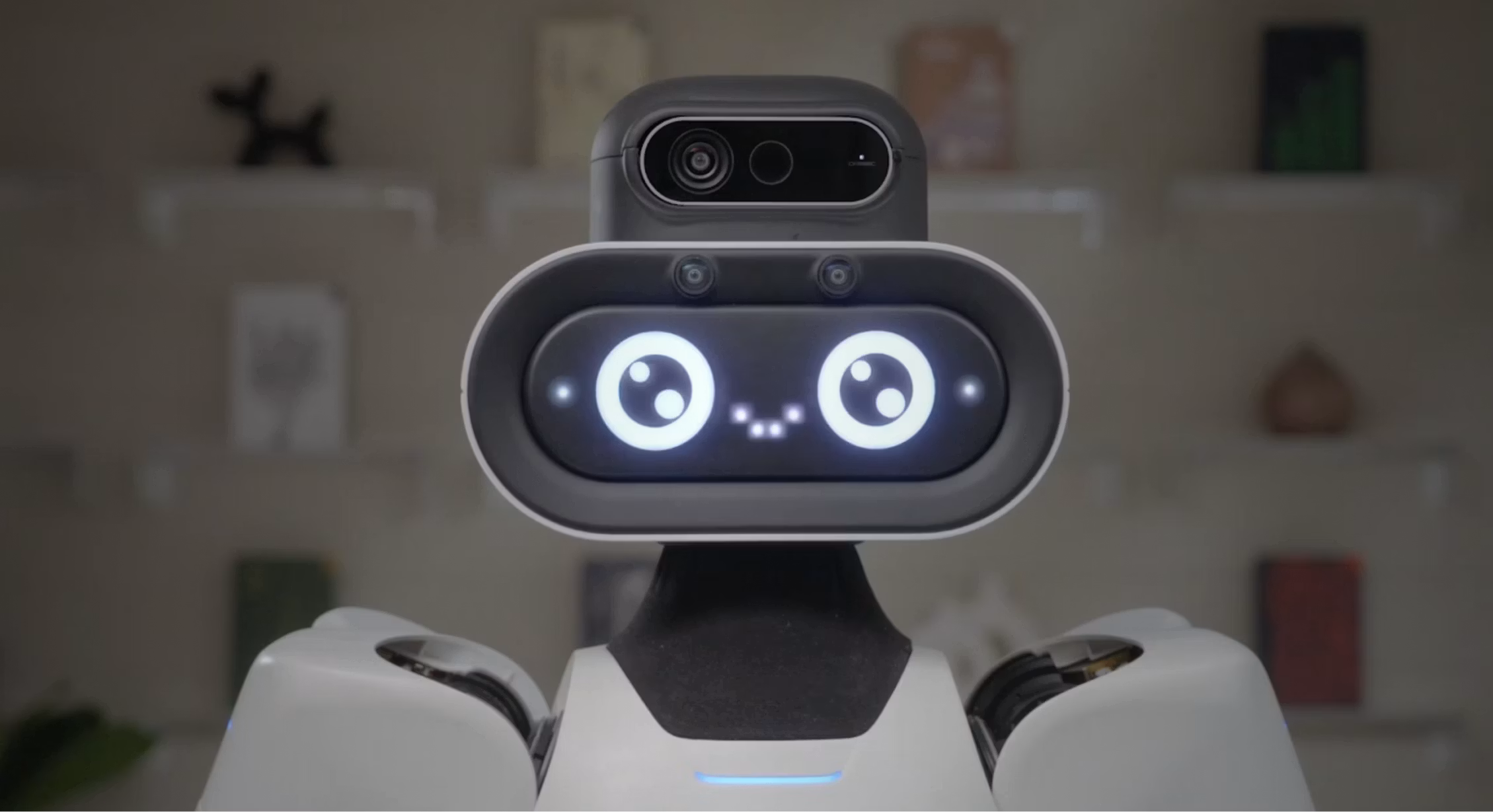
This is where I asked Felipe a question that, in hindsight, was too leading and showed some of my own bias. I suggested that the tolerance for character in the workplace had a ceiling. That a version of R-noid deployed into homes would allow its personality to get dialed up. But Felipe pushed back immediately. “I have a contrarian view,” he said. “I feel like we can actually be more aggressive with personality in work environments than in home environments.” His logic: people spend more of their waking hours at work than anywhere else, which makes it the place personality and socialization matter most. Home, in his view, is where people go to be alone.
Those who have read this Substack before know that my interest in character design in robotics extends beyond the craft of it to the infrastructure of how companies organize. Character is something teams can align around. Because when a character is well-defined, every arm of the business acts on its own without needing direction from the top. Like how, on a TV show, set dec knows how to build a character’s house, and wardrobe knows what jacket they’d wear, without speaking to the showrunner.
On that front, Robot.com is doing something worth discussing. Their “R-Soul” software layer is not built in-house. For that work, Felipe partnered with a Japanese firm called Yukai Engineering that specializes in the development of robots that “bring joy to life.” I asked him what a company gains, and what it loses, when it outsources personality. He said doing so allows his team to keep their focus on teaching a robot to move, to think, to carry the whole platform underneath. Character gets handed to people who’ve already mastered it. “I’d rather bring in people who already pour their hearts into it than spend years catching up,” he told me.
On one hand, I understand the appeal of this division of labor. It allows Felipe’s team to focus on their core competencies and the extremely difficult challenge of delivering robots at scale. But I also wonder if something gets lost by farming it out. The negotiations between departments that force the character people to learn how to speak AI and the engineers to learn how to speak story.
In a word, friction. Not so different from the challenges that sparked Kiwibot’s eyes, its small footprint, and that candle-lit vigil in the first place.
Interestingly, shrines and funerals for food delivery robots has now become commonplace when a unit is damaged or taken out of circulation. One of my favorite messages in remembrance: “Today, we mourn the loss of one of our own. We will never forget the service you have done for our school. Fly high, little guy 🕊️🥺❤️🩹”
Toward the end of the call, Felipe showed me something on his phone that’s not public yet, so I won’t describe it in any detail. Only say this: Robot.com’s next iteration of food delivery bot has the capability to embrace character and personality unlike anything currently rolling down the sidewalks. Which makes sense, because Felipe’s own litmus test for determining if his robots are successful has nothing to do with tracking the statistics of tasks completed.
He says, “I want one day, if a customer decides they don’t want to use our robots anymore, that the workers around them get sad. Like it’s a pet. Like a new breed of animal that’s in your environment.” He wants them to genuinely mourn the loss.
Most robotics roadmaps end in units shipped. Felipe’s ends in more vigils.
Such an interesting and insightful look into the world of robots. It feels both futuristic and completely normal at the same time.